The Tap Standard Has Arrived — And Your Ordering Process Probably Fails It

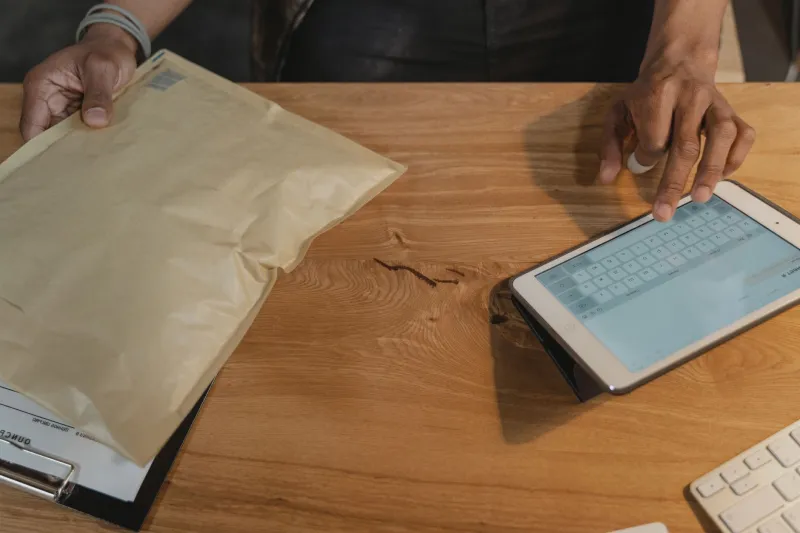
Photo: Stocksnap, CC0, via Wikimedia Commons
There is a new baseline for commercial interaction in the United States, and almost nobody announced it. It was set gradually, then all at once: order lunch in four taps, reorder household essentials in two, check out from a national retailer with a stored card and a fingerprint. Consumers didn't adopt these behaviors as a novelty. They adopted them as a default — and then carried that default into every other purchasing decision they make, including the ones involving your business.
This is what might be called the tap standard: the expectation that completing a purchase should take seconds, require no instruction, and never involve waiting for a human to become available. It applies as much to a facilities manager ordering janitorial supplies as it does to a teenager ordering a pizza. The context changes; the expectation does not.
Why B2B Buyers Are Consumers Now
A common objection is that business purchasing is different — relationship-driven, higher-stakes, governed by quotes and terms. That's partly true, and mostly beside the point. The person placing the order for your commercial customer goes home and lives in the consumer economy. They reorder their groceries in a minute and a half. When they get to work and face a supplier whose ordering process involves a phone call, a faxed form, or a PDF price list, the contrast isn't neutral. It reads as friction, and friction reads as a reason to look elsewhere.
Surveys of B2B buyers consistently find that a majority now prefer to reorder online without speaking to a salesperson, and that a meaningful share will switch suppliers over a poor digital ordering experience even when pricing is competitive. Loyalty still exists — but it is increasingly conditional on convenience.
The Five-Point Tap Audit
Business owners can evaluate their own ordering experience against the tap standard with a short, honest exercise. Take out a phone — not a desktop with a second monitor and institutional knowledge — and attempt to place a real order as a customer would.
1. Count the taps to first commitment. From landing on your site or opening your app, how many interactions does it take before a customer can add something to an order? If the answer involves navigating a menu structure designed around your org chart rather than their task, that's friction. Best-in-class experiences get there in one or two.
2. Count the fields to checkout. Every form field is a decision point where abandonment becomes possible. Name, delivery address, payment — the essentials. If you're asking for a company name, a PO number, a phone number, and a "how did you hear about us" before payment, you're collecting data at the expense of completed orders. Save optional fields for after the transaction.
3. Test it without an account. Forced account creation is one of the most reliable abandonment triggers in e-commerce research. If a first-time customer cannot complete a purchase as a guest, estimate how many you're losing — then decide whether the marketing database is worth the trade.
4. Check the load time on cellular. Most after-hours ordering happens on phones, over mobile networks, sometimes in trucks or job sites with weak signal. If your ordering page takes more than three seconds to load, a measurable percentage of customers are gone before they see your prices.
5. Ask what happens after the tap. Does the customer get immediate confirmation? Can they check status without calling? The purchase experience doesn't end at checkout; uncertainty afterward erodes the confidence that fast ordering builds.
Friction Is a Choice, Not a Fact of Your Industry
The most instructive thing about the tap standard is how unevenly it has been adopted. Within the same trade categories — distributors, service providers, regional suppliers — some businesses have rebuilt their ordering around the customer's phone, and others are still emailing order forms back and forth. The gap between the two is widening into a genuine competitive divide, because the businesses with low-friction ordering are capturing not just more orders but more repeat orders, driven by the simple fact that reordering from them is easier than reordering from anyone else.
None of this requires abandoning the human relationships that underpin many small businesses. It requires reserving human attention for the moments it adds value — complex orders, negotiations, problems — and getting out of the way for the routine transactions customers would rather complete themselves.
Run the audit. Count the taps. Whatever number you find, assume your fastest competitor has already counted theirs.